
Why do ancient historians use speeches in their works?

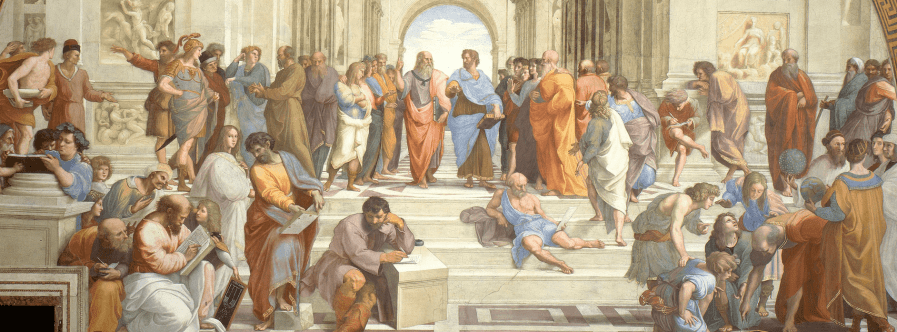
Procopius records ‘he [Gelimer] neither wept nor cried but ceased not saying over the words of the Hebrew Scripture: “Vanity of vanities, all is vanity”’. Procopius commentates nothing; alas, there is no more to be said. Though in his lifetime the Mediterranean was once again a Romanum Lacum, Justinian’s empire was economically prostrate, beset on …

Continue reading Why do ancient historians use speeches in their works?

Examining the Impact of Meritocracy on Societies Through Historical and Ethical Lens

The notion of meritocracy – a societal system in which people are selected on the basis of their demonstrated abilities and merit – has been thoroughly, and for many unknowingly, ingrained into Western society and political structure. In the Western capitalist democracies, efficiency is integral to maintaining consistent advancements both technologically and economically; the premise …

Continue reading Examining the Impact of Meritocracy on Societies Through Historical and Ethical Lens

Shift of Mathematical Truth Over Time

Since the introduction of mathematics in its rawest form in Ancient Greece, mathematical knowledge has since been revered by all for its quality of objective truthfulness. But it is not as simple as it seems. There are already many issues with objective truthfulness when one analyses the origins of mathematics itself: the axioms. In this …

Continue reading Shift of Mathematical Truth Over Time

The Song of Everlasting Regret Part 2

What follows is the second part of my interpretation of 长恨歌 (the song of everlasting regret) by 白居易. See part 1 here: https://venividiveritas.com/2023/05/09/the-song-of-everlasting-regret-part-1/ 九重城阙烟尘生,千乘万骑西南行。 Above the forbidden city loomed the smoke of war. Southwest the host travelled, a thousand horses, ten thousand men. 翠华摇摇行复止,西出都门百余里。 The emperor's jade crown swayed and turned, the fire of rebellion …

Continue reading The Song of Everlasting Regret Part 2

Redefining the Nostalgia of History

Recently, I watched the ‘Last Emperor’, famously directed by Bernardo Bertolucci in 1987, winning nine Academy Awards for its screenplay and performance. It was a fuzzy feeling seeing the imposing Forbidden City during the last years of the Qing Dynasty – guarded by rows of armoured imperial guards – in contrast with the desolate and …

Continue reading Redefining the Nostalgia of History

French Revolution Part 3: The World of 1700s

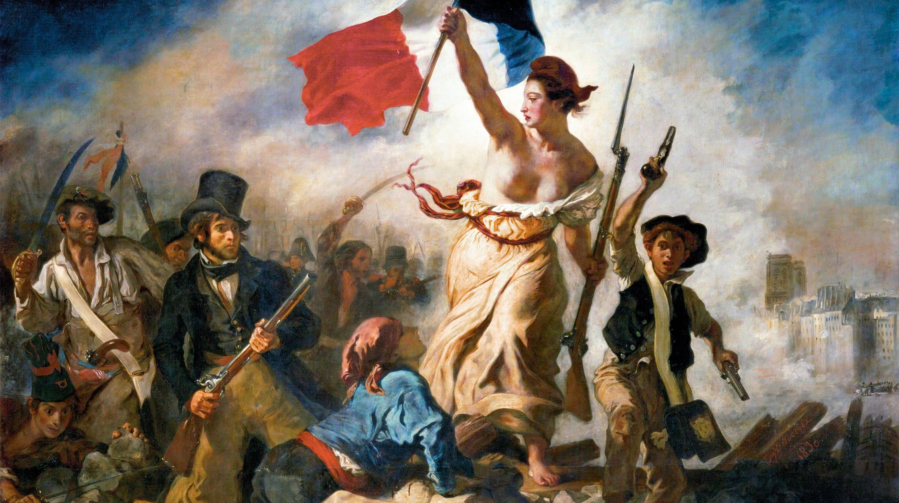
The Ancient World can be construed as a narrative of singularities, with globe-spanning empires founded upon the fabled bounties of the Fertile Crescent dominating the story. The advent of agricultural technology and the arrival of the Roman Climate Optimum had endowed the men and women of the Oecumene with the incentives to coalesce into three …

Continue reading French Revolution Part 3: The World of 1700s

The Axioms of History

The study of history is distinguished from that of natural sciences and mathematics by two key differences: The basis of knowledge and evidence upon which the discipline of history is constructed is by nature polluted by political and ecclesiastical agendas, prejudices, biases, and unreliable sources. This churning sea of lies and rumours is the unknowable …

Continue reading The Axioms of History

French Revolution Part 2: The Political Theory of Revolution

Every society can be likened to a swirling whirlpool of conflicting interests: a volatile amalgamation of disparate constituencies operating under a largely uniform set of values which are defined as ideology, faith, morality, or tradition. Each interest group is a current of its own, driven by a distinct set of demands and agendas, thus it …

Continue reading French Revolution Part 2: The Political Theory of Revolution