The Historical Development of Legal Systems

The following is a summary/reflection written during my study of the historical development of jurisprudence through Henry Sumner Maine's Ancient Law. It was an exciting and rewarding read, hence this piece of writing. It's also probably a bit more disconnected than usual, since Maine weaves together a large variety of ideas within short paragraphs and …

Continue reading The Historical Development of Legal Systems
Why do ancient historians use speeches in their works?

Procopius records ‘he [Gelimer] neither wept nor cried but ceased not saying over the words of the Hebrew Scripture: “Vanity of vanities, all is vanity”’. Procopius commentates nothing; alas, there is no more to be said. Though in his lifetime the Mediterranean was once again a Romanum Lacum, Justinian’s empire was economically prostrate, beset on …

Continue reading Why do ancient historians use speeches in their works?

Examining the Impact of Meritocracy on Societies Through Historical and Ethical Lens

The notion of meritocracy – a societal system in which people are selected on the basis of their demonstrated abilities and merit – has been thoroughly, and for many unknowingly, ingrained into Western society and political structure. In the Western capitalist democracies, efficiency is integral to maintaining consistent advancements both technologically and economically; the premise …

Continue reading Examining the Impact of Meritocracy on Societies Through Historical and Ethical Lens

The Song of Everlasting Regret Part 1

What follows is a personal interpretation and translation of the famed Chinese poem 长恨歌,or The Song of Everlasting Regret, by the poet 白居易. Written in the ninth century, it depicts the tragic love story between an emperor and his concubine and is renowned for its literary flourish and narrative flow. This article covers the first …

Continue reading The Song of Everlasting Regret Part 1

Redefining the Nostalgia of History

Recently, I watched the ‘Last Emperor’, famously directed by Bernardo Bertolucci in 1987, winning nine Academy Awards for its screenplay and performance. It was a fuzzy feeling seeing the imposing Forbidden City during the last years of the Qing Dynasty – guarded by rows of armoured imperial guards – in contrast with the desolate and …

Continue reading Redefining the Nostalgia of History

Innovation Part 5: Board Games

Typically, when we think of a board game, our minds could wander off in many different directions. Perhaps it's that dusty board of monopoly you haven’t played since you were a kid. Perhaps you think of “Articulate!” a quick combination of wit and creativity, or maybe it's that green scrabble board. But for many young …

Continue reading Innovation Part 5: Board Games

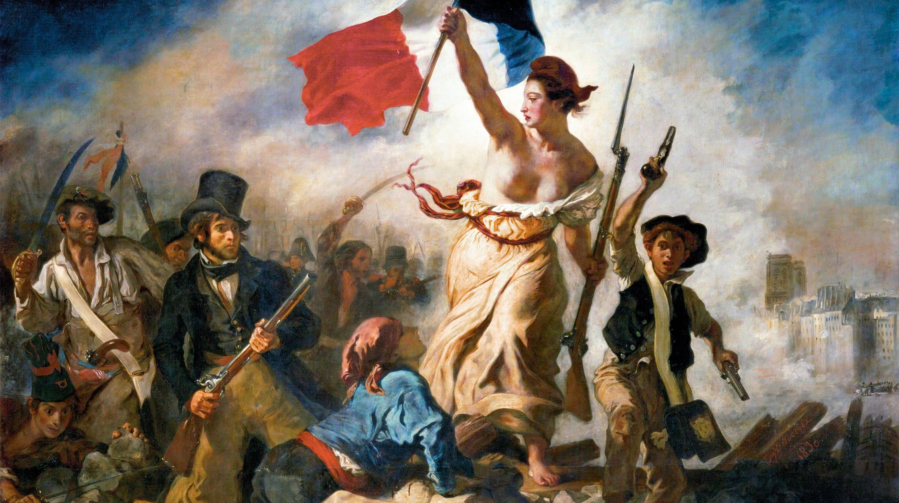
French Revolution Part 3: The World of 1700s

The Ancient World can be construed as a narrative of singularities, with globe-spanning empires founded upon the fabled bounties of the Fertile Crescent dominating the story. The advent of agricultural technology and the arrival of the Roman Climate Optimum had endowed the men and women of the Oecumene with the incentives to coalesce into three …

Continue reading French Revolution Part 3: The World of 1700s