
Five hundred years before the birth of Christ, the world was still a wild and untamed place. In the aftermath of the Bronze Age Collapse, the quest for sustenance defined the lives of beasts and men alike. Civilisation, scattered and confused, was confined to the north of the equator, in a narrow strip of the world that stretched from Hispania to China. Humanity had yet to become its own master, and few doubted that the divine aether still terrorised the realms of earth. In sacred groves satyrs sounded maddening pipes, and in muddy waters lurked serpents slain by creator gods. Beneath a frightful sky of stars, blood-soaked shrines and ashed-choked smelters bore witness to the folly and genius of man in his Axial nascence.
And yet, civilisation endured and grew. With the power of metal and earth, the inhabitants of these precious lands had begun the slow and arduous process of agrarian urbanisation. In the advent of agricultural reforms, the centres of demographic growth gestated the first organised states in history. The Nile in Aegypt, the Euphrates and the Tigris in Mesopotamia, the Indus in India, and the Yellow River in China each saw the rise of sovereign states, and for centuries their pre-eminence remained unchallenged. Among the greatest of these imperial peoples were the Iranians, who, united under their shahanshah, assembled the largest empire the world had ever known. From the coasts of Ionia by the Aegean to the rivers of the Indus Valley, the might of Persia’s King of Kings were felt and seen by all.
And yet, a mere two centuries after its founding, the empire of the Persians was no more. A new people crossed the Hellespont into Asia, retracing the steps of Xerxes and sweeping all before them. In a few short years, the small Balkan kingdom of Macedonia had engulfed the civilised world. In his wake, Alexander the Great left behind twoscore cities consecrated with his divine name. Within a decade after the fall of the Shahanshah, Hellenic colonies took roots in the Near East. The ascendent Helleno-Macedonian way of life blossomed. The philosophy of the conquerors melded with that of the conquered to synethsise a new identity. “Hellenistic”—the name for the world’s new order was a term coined by posterity to mark both a culture and an era.
In the century following the anabsis of Alexander the Great, the Hellenes spread across the narrow reaches of civilisation, exploiting their unrivalled geopolitical strength. Rustic peoples, residing in the Western Mediterranean, soon adapted to the new reality of Hellenic predominance. City states and colonies in the image of ancient Athens and Corinth rose in swathes. Italia, a volcanic peninsula to the west of Hellas, was no exception. The same fragmented geopolitical circumstance which had once plagued Hellas was inherited by Italia. The Celts ruled in the Alpine valleys, the Etruscans in the northern hills, the Latins resided by the riverlands, the Samnites in the Apennine mountains, and the Hellenic colonies mastered the southern coasts of Magna Graecia.
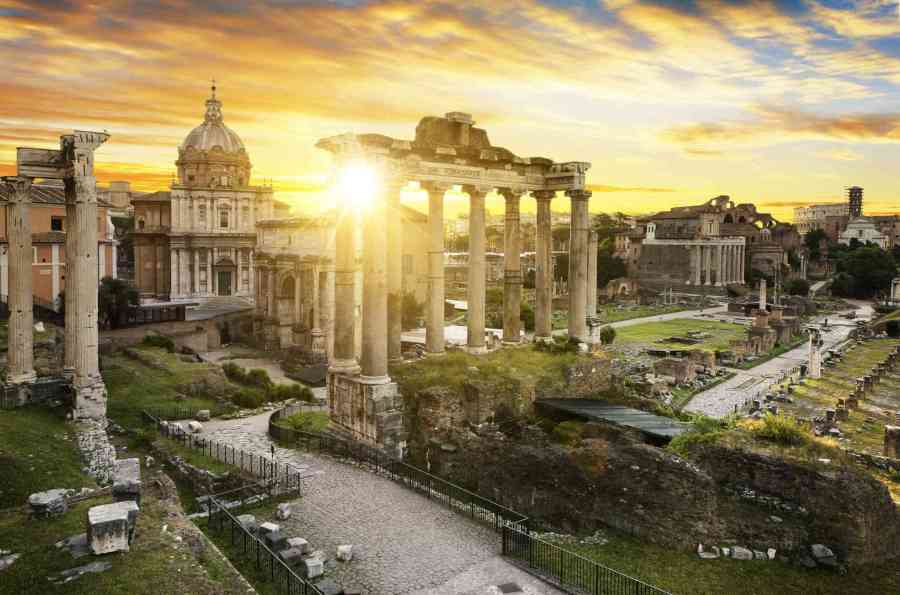
Among these shifting powers was a paltry city state poised on the banks of the Tiber river in Latium. Like many of its neighbours, Rome traced its roots to a mythical past where gods and heroes alike walked the earth. They claimed descent from a pair of demi-god brothers—Romulus and Remus—to whose mortal ichor the Romans attributed their divine fortune. In the early years of its existence, Rome had been dominated by Etruscan kings, but like their Hellenic counterparts, they had since expelled autocracy from their system. Demokratia, as first invented by the Hellenes, was to be their governing philosophy from now on. Res publica, they called it, the sacred conglomeration of public interest.
Just as the Persian Empire had once been absorbed by the obscure Macedonians, the Hellenistic world was soon transformed by the military victories of an once-insignificant people. Over the span of three centuries, the farmer-soldiers of Rome carried all before them in the fields of battle, crushing the heirs of Alexander’s imperial enterprise and establishing their own. The Italian peninsula was the first to fall under Rome’s sway. One by one, Sicilia, Sardinia, Corsica, Hispania, Africa, Illyria, Epiros, Macedon, Hellas, Anatolia, Syria, Judaea, Mesopotamia, Cyrenaica, and Aegypt followed. Come the final revelation of Christ, the Oikumene (“Known World”) belonged to the Romans.
But unlike the Macedonians and the Persians before them, who splintered into a thousand realms, the men from Ausonia strove to forge imperial unity and centralise power. Their dogged determination to absorb their conquests into their political and cultural orbits without compromising their hegemony planted the seed for a new universal identity. As with the Hellenistic and Persian cultures, the inhabitants of the agrarian world of Europe and Asia embraced the Roman way of life. In this Roman cosmos, the state’s ability to retain its dominance over the Romanised population of the Mediterranean enabled it to define civilisation as conceptualised thereafter. Gaul, Germania, Britannia, Thracia, Lucitania, Dacia, Hungaria, and Russia, cradles of our modern world, were sparsely populated lands before their annexation by the Romans. Through relentless expansion and unyielding loyalty to the fatherland, the Roman Empire became a conduit through which the agrarian urbanised way of life—the foundation of contemporary human society—spread beyond the traditional confines of civilisation.
With the cerulean waves of the Mediterranean serving as the beating heart of their realm, the Romans remade the Western world in their image. Having ruled as hegemons for more than 800 years, their unparalleled longevity engrained the infrastructure, culture, administrative traditions, and technology of their way of life in the psyches of the Eurasian peoples. The very name of Rome seemed to have been endowed with a mythical ideal. Even after they ceded mastery of the world to the Arabs and the Germans in the fifth and seventh century, the Romans remained in possession of the most sophisticated and powerful Christian state—based in Anatolia and Hellas—until its destruction in 1204 AD, when Frankish, Norman, and Venetian descendants of their former rivals in the West sacked Constantinople.
The story of Rome’s Odeyssey, from a democratic city state founded in the Hellenic traditions of farmer-warriors to the world’s most influential autocracy, and then returning to national homogeneity as a Christian empire bordering the ascendent Caliphate, is a fascinating tale, filled with the drama and excitement of a novel and the rigour of academia. It is a story that deserves to be told.
 Veni Vidi Veritatem