
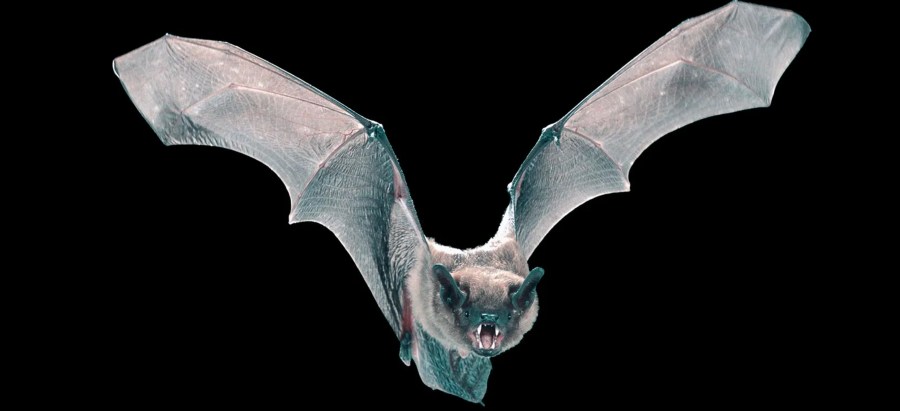
In this essay I will present the perspectives of Australian philosopher J.J.C Smart and American philosopher Thomas Nagel on the contemporary philosophical debate on the question: Can science ever tell us what it is like to be a bat? Smart presents an argument for the explanatory power of science, whilst Nagel argues the contrary, that there are some aspects of a bat’s experience which can never be understood by a human.
Could science ever tell us what it is like to be a bat? J.J.C Smart argues that it indeed is possible by contingently establishing an identity between sensations and brain processes, whilst Nagel argues that certain facts about the bat’s subjective experiences simply cannot be conceived of by us. By resisting Smart’s identity thesis and responding to some potential criticisms of Nagel’s response, I will argue that science can indeed never tell us what it is like to be a bat.
While Smart accepts consciousness as a phenomenon that requires explanation, he resists the suggestion of the non-physicality of such mental events, by arguing for a strict identity between mental states and brain-processes. He argues that since science’s explanatory power is ever increasing and will eventually move past the problem of correlation, and that physicalism and dualism have equal explanatory power, then by virtue of Occam’s razor, physicalism is more plausible, because it includes less things which require explanation, whilst dualism must account for the nature of nomological danglers. To complete his claim of strict identity and thereby justify his use of Occam, Smart resists that sensations are over and above brain processes by making it clear that he is not arguing for a semantic identity between sensations and brain processes, but rather an ontological one. That is, mental states of consciousness may follow a different logic to brain processes, but they are nevertheless ontologically identical. He therefore contends that science can eventually establish an strict identity between sensations and brain processes. Since science talks in terms of brain processes, which themselves are identical to sensations, and consciousness consists of mental states, Smart would therefore argue that it is eventually possible to explain what it is like to be a bat, as we will eventually obtain a complete understanding of the bat’s sensations, and hence its consciousness.
Nagel, on the other hand, agrees with Smart in that he believes physicalism to be true, but that Smart’s method of reduction fails to sufficiently account for the subjective character of experience, which is an essential feature of the mind. Nagel directly argues that an organism has conscious mental states if and only if there is something it is like to be that organism, for that organism – there are therefore subjective facts of experience. To show that, opposite Smart, there is in fact a significant explanatory gap, Nagel argues that a bat, a being which no doubt has conscious experience, has a vastly different sensory apparatus to humans, and therefore it is impossible for us to experience what it is like to be a bat – we thus have no conception of what it is like to be the subject of a bat’s experience for a bat. Those subjective facts, Nagel says, cannot be denied by us, just as a Martian cannot deny certain facts about our highly specific subjective character of experience as we alone know what it is like to be us. Contrary to Smart’s appeal to science’s authority, Nagel argues that the physical operations of the bat do not tell us anything about what it is like to experience the subjective point of view of a bat, since subjective facts of experience are only accessible from the point of view of the bat. Nagel also contends that reductive physicalism consists of objective facts par excellence that can be understood across POV types – Smart’s identity claim is thus unintelligible to Nagel, because experiences or sensations are unique in its subjective character, deviating from the naturally objective explanatory process of science, and hence deeming science as unfit for describing the subjective character of experience. Nagel thus proposes the formulation of an objective phenomenology that could directly describe the subjective experiences of an organism in a form comprehensible to beings incapable of having those experiences. Yet even then, Nagel admits that it could not capture every particularity of the subjective experiences of another organism, and hence, he would argue that science will likely never tell us everything about what it is like to be a bat.
Is Smart and Nagel’s conclusion about the plausibility of physicalism justified? I will argue that physicalism is plausible, because mental events seem to be interrupted by significant physical occurrences – a person who suffers a significant brain injury seems to be affected on a mental level, with drastic changes not just to their behaviour, but also to their mental capacities, as it seems. Whilst this does not remove the conceivability of a causal dependence of the mental on the physical, physics itself seems to be a completely closed system, and it is simply inconceivable to think that certain configurations of the physical may give rise to something nonphysical; such a possibility would violate not only the causal completeness of the physical, but numerous laws of physics such as the conservation of energy.
However, I find Smart’s identity thesis to be an unconvincing justification of physicalism, because the problem of multiple realizability prevents the strict identity of brain processes and sensations. Indeed, if two things are strictly identical, then a specific mental state can occur if and only if a physical state occurs. However, a mental state, say pain, may be physically instantiated in two people in very similar but slightly different ways. This slight difference means that mental states are no longer identical to brain states, but are something over and above. This slight difference means that mental states are no longer identical to brain states, but are something over and above – Smart’s identity thesis therefore fails to plausibly justify consciousness to be entirely physical.
On the other hand, I find Nagel’s move to link consciousness to a subjective character of experience extremely plausible, and therefore I believe that `conscious experience is resistant to objective explanations, and should instead account for ‘how they appear to me’, not ‘how they are’. Indeed, the statement ‘I see white’ can intuitively be translated to ‘there is white’; however, even if there truly was something white, the statement ‘there is white’ fails to truly capture the phenomenal experience which the ‘I’ in the ‘I see white’ statement. Thus, I find Nagel’s claim of the existence of subjective facts of experience to be plausible.
A possible objection to Nagel’s claim about there being subjective facts of experience is that facts about a bat’s (or any animal’s) subjective experience may actually hinge on unanswered questions about the neuroscientific details of a bat’s brain. I however still find Nagel’s claim to hold, because even if we can discover all the neuroscientific facts about the bat’s brain processes, we can only interpret those facts through our human sensory apparatus – it is impossible for those scientific facts to truly explain what it is like for a bat to be a bat, because we cannot conceive of such an experience, and when we try to conceive of it, we merely imagine what it is like for us to be a bat.
Thus, it seems that there are certain facts about subjective experience which are simply unattainable through a human point of view, because we lack the sensory apparatus to do so. Science therefore seems to be unable to tell us what it is like to be a bat, because consciousness cannot be entirely explained by brain processes, due to the multiple realizability of mental states, as well as the existence of certain subjective facts of experience which resist objective explanation. Even though Nagel argues against reductive physicalism, he concedes that his proposal of an objective phenomenology which can, to some extent, describe experiences of different types of POV will ultimately be unlikely to entirely describe every subjective fact of another POV type. I therefore align with Nagel, in that science, or in fact any objective explanation, will never be able to fully capture what it is like for a bat to be a bat.
 Veni Vidi Veritatem