
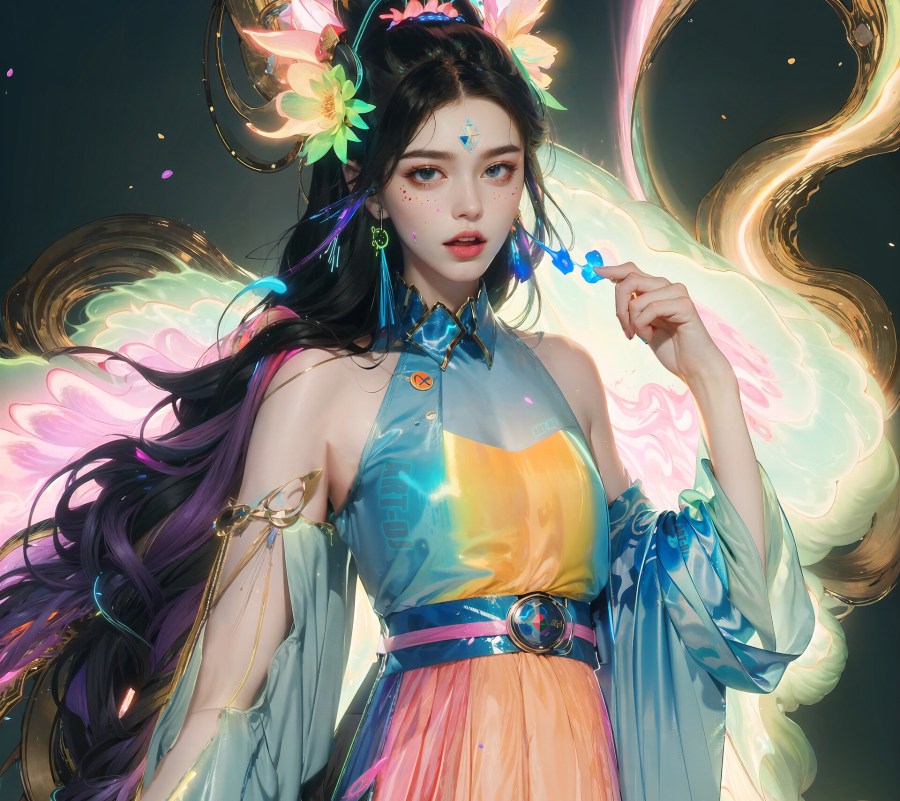
What follows is my personal interpretation and translation of the famed Chinese text, 洛神赋 (Encounter With A Goddess, sometimes translated as “Ode to the Nymph of the Luo River“) , by 曹植 (Cao Zhi). Born in 192 AD, the author was renowned for his talent, ambition, and brilliance, writing many of China’s most well-known poems. This piece of writing, however, is a narrative essay and a fantastical account of the author’s imagined encounter with a river goddess and a celestial concubine. This first part contains the most overt section of the essay, describing in detail the appearance of the goddess. Due to the abundance of references in the text, and the author’s tendency to allude rather than explicate, it was exceedingly hard to translate, but I did my best with what the English language has to offer. As always I prioritised literary beauty over the exact transplantation of meaning. I am eager to learn if you see alternative ways of translating certain sections.
黄初三年,余朝京师,还济洛川。
In the Third Year of my brother’s reign, I travelled to the capital to pay my respect. On the return trip, I passed by the storied river Luo.
古人有言:斯水之神,名曰宓妃。
The ancients once said: the god of this river was named Mi.
感宋玉对楚王神女之事,遂作斯赋。其辞曰:
Recalling the story of a goddess Song Yu told the king of Chu, I was thus inspired to write the following:
余从京域,言归东藩,背伊阙,越轘辕,经通谷,陵景山。
Returning from the capital, through mountains, hills, and valleys I travelled.
日既西倾,车殆马烦。
With the sun setting, men and horses alike were weary.
尔乃税驾乎蘅皋,秣驷乎芝田,容与乎阳林,流眄乎洛川。
Among tall grass we stopped. Horses grazing, I wandered the forest, gazing at the famed river.
于是精移神骇,忽焉思散。
Suddenly, as though possessed by spirits, my thoughts blurred and reason faltered.
俯则未察,仰以殊观。
Across the river, I saw a most wondrous sight.
睹一丽人,于岩之畔。
With my own eyes I beheld, on the rocky river banks, a divine beauty.
乃援御者而告之曰:“尔有觌于彼者乎?彼何人斯,若此之艳也!”
Returning to my entourage, I asked my coachman: “Did you see that? Who is she, possessed of such frightful glamour!”
御者对曰:“臣闻河洛之神,名曰宓妃。然则君王之所见也,无乃是乎!其状若何?臣愿闻之。”
He replied: “My prince, I have heard that the goddess of this river bears the name Mi. Perhaps it was she you beheld? What did she look like? Your servant’s ears are eager to listen.”
余告之曰:其形也,翩若惊鸿,婉若游龙。
Thus did I divulge: her body was as elegant as an ascending swan goose, as graceful as a soaring dragon.
荣耀秋菊,华茂春松。
Her visage gleamed with the brilliance of blooming chrysanthemums, and her frame swayed with the lively vigour of verdant pines.
髣髴兮若轻云之蔽月,飘飖兮若流风之回雪。
Her hair flowed like moon-concealing clouds, like wintry breeze carrying returning snow.
远而望之,皎若太阳升朝霞;迫而察之,灼若芙蕖出渌波。
Gazed from afar, she appeared imbued with the incandescence of the dawning sun; observed from up-close, she appeared flushed with the vibrance of a sacred lotus.
秾纤得中,修短合度。
Slender or voluptuous, willowy or delicate, she was perfection in between.
肩若削成,腰如约素。
Lissom shoulders, as though hewn by a craftsman’s blade, slim waist, as though moulded by heaven’s hands.
延颈秀项,皓质呈露。
Refined, slender neck, nude, pale, and tender.
芳泽无加,铅华弗御。
Not a trace of make-up could be seen, for none was needed.
云髻峨峨,修眉联娟。
Her hair was high-flying clouds, her brows were slim willow leaves.
丹唇外朗,皓齿内鲜。
Vermillion lips, ivory teeth, bright and saturated.
明眸善睐,靥辅承权。
Enchanting eyes, glowing with immaculate glamour, exquisite dimples, blooming beneath chiseled cheekbones.
瓌姿艳逸,仪静体闲。
Celestial beauty, serene grace.
柔情绰态,媚于语言。
Gentle was her countenance, allure beyond words.
奇服旷世,骨像应图。
Unparalleled was her raiment, beauty beyond paintings.
披罗衣之璀粲兮,珥瑶碧之华琚。
Flowing silk, shimmering jade, adorning her sublimity.
戴金翠之首饰,缀明珠以耀躯。
Gilded viridescence, peerless pearls, exalting her glory.
践远游之文履,曳雾绡之轻裾。
Parting the clouds, she tread a flowering path.
微幽兰之芳蔼兮,步踟蹰于山隅。
Clad in the sublime fragrance of orchids, she wandered at the mountain’s seat.
于是忽焉纵体,以遨以嬉。
Prideful yet playful, she moved nimbly, almost obscured from sight.
左倚采旄,右荫桂旗。
Within her hands she held the celestial banners.
攘皓腕于神浒兮,采湍濑之玄芝。
Then, with her slender hand, extending from flowing sleeves, she plucked from the Luo riverbank a black flower.
Cao Zhi, along with being one of the most brilliant man-of-letters of his time, was also the prodigious son of Cao Cao (曹操), the de facto ruler of China for much of the Three Kingdoms Period and the viceroy of the Emperor, Son of Heaven, whom he had made a puppet after the Han Dynasty’s fall. For much of his childhood, Cao Zhi was his father’s favourite child, who showered him in praises and gifts for his talent and ambition. He was all but assured to succeed his father and become the ruler of China. Allegedly, the great statesman saw in Cao Zhi the fire which once burned within his own heart, when he was yet a young man seeking to make a name for himself in a fractured world. And yet, Cao Zhi seemingly cared not for temporal power and lived a life of unrestrained passion. His arrogance and unruly behaviour eventually incurred paternal wrath. Cao Cao stripped his favourite son of his privileges and banished him, striking him from his will. The young prince and prodigy could only watch as his brother inherited Cao Cao’s mantle and claimed the title of Emperor, fulfilling his father’s dying wish. Fearful of sedition, the Emperor forced Cao Zhi, his brother, into a life of obscurity, in which he soon perished, his ambition never fully realised. Encounter with a Goddess was thus written at the nadir of Cao Zhi’s fortune, when he was overcome with great distress. Part 2, which is soon to come, will further serve to illustrate his woes.
 Veni Vidi Veritatem