
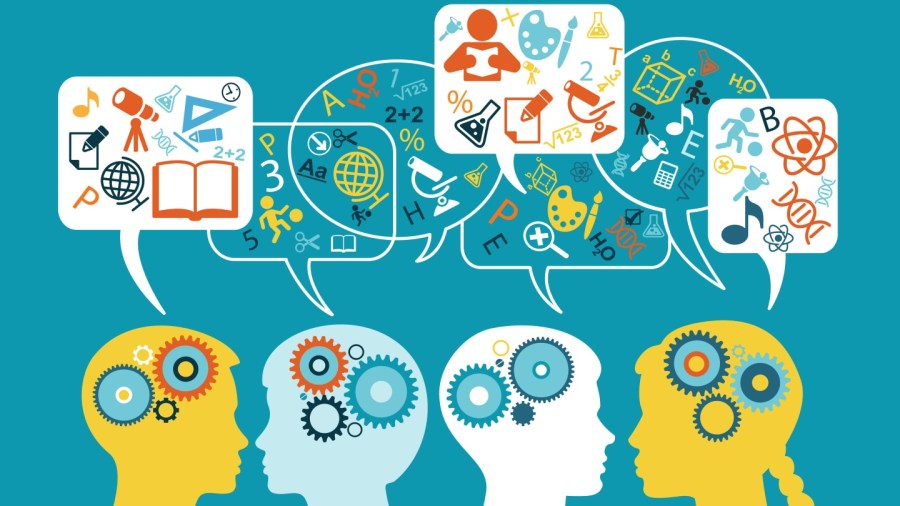
One of the most baffling questions I’ve always been curious about is: “How exactly do we learn and grasp new information?”. We normally think about primary, secondary or higher education institutions, but learning occurs in many different ways, from observation, to practical demonstration, to application, as is seen in many scenarios in our world today. But how much exactly do we gain from learning through these methods, and how exactly do different people learn in different environments?
In this article, we’ll be briefly looking at different methods of cognition. As far as our world is concerned, most learning can be split into 3 stages. Firstly, we are exposed to new information — and we need to grasp it. We then take some time to actually process this, and understand it — practice. Finally, we come back to the purpose of learning and need to apply information — whether that be to make our tasks more efficient, study for a test, or use our skills and information to conduct a personal project.
We’ll first look into both exposure and processing and understanding. When we first come into contact with new information, many common feelings are being overwhelmed, frustrated, or satisfied. I know I’m not the only one who has read an article, a page in a book, or seen a segment of a video, and has no clue what is going on. But what actually goes on behind the scenes in our minds? Our brain is a mass of water, protein and fat, but most importantly, it contains blood vessels and neurons, which are responsible for transmitting information within the body. For instance, a motor neuron controls our movements. Every time we learn something new, our brain connects the synapses — that’s just a fancy word for connections — between our neurons. The more we practise and are exposed to the information, the stronger these connections become — this is often termed “neuroplasticity”. As these connections become stronger, our ability to perform a task with this knowledge is more natural, and many of our old methods become more dormant. This is why lack of practice may mean that our movements and knowledge will feel quite awkward to apply at the start.
What are some methods to increase neuroplasticity? To do this, we need to bring in another term, a neurotransmitter — glutamine. Put simply, neurotransmitters are messengers which stimulate a nerve cell to pass on a message. These transmitters are what promotes learning and ultimately skill acquisition. However, it is worth noting that glutamine supplements are harmful, and excessive amounts can lead to Parkinson’s disease and other neurological disorders (so no, there’s no glutamine steroids to boost your memory).
Research has, as far as of now, found no method of learning that is more productive than any other. Visual learning typically suits those with a stronger memory, and perhaps already have a strong foundation of the subject. Kinaesthetic, or hands on learning suits curious individuals who may have a tendency to perform “trial and error”, or prefer to physically interact with tools, formulas or pieces of technology and want to learn. Auditory learning, or a combination of auditory with aural learning may help new learners, as they will have to connect neurons in their brain (put simply) in order to evaluate and understand concepts. Generally, combinations of different types of learning is the best way to go about it; most, if not all companies and institutions recognise the importance of practice on top of knowledge to develop understanding as well as critical thinking abilities.
Personally, I love hands-on learning, due to the limitless opportunities you get, and the endless conundrums you are able to consider. Learning a new skill nowadays rarely is just about absorbing information, and is now rather focused on adapting the skill to many different scenarios, meaning we need a greater degree of neuroplasticity. In sports, you not only need to know how to kick a ball, but also when to kick it and who to kick it to. In higher education, say in a CS degree, you not only need to know HOW to code, but also how to apply the code in different situations. In the workforce, take investment banking, you not only need to know what to look for in a company, but also analyse different opportunities, and whether they will generate positive returns in the midst of an ever changing market.
It is worth noting that neuroplasticity and neurotransmitters are not the only catalysts to learning; there are many other factors, including but not limited to sleep, ability to focus (this can also be impacted by environmental factors), stress and other neural networks. However, it would be foolish not to consider the significance of the impact of different learning methods on neuroplasticity and neurotransmitter.
Image credit: Brown University
 Veni Vidi Veritatem