
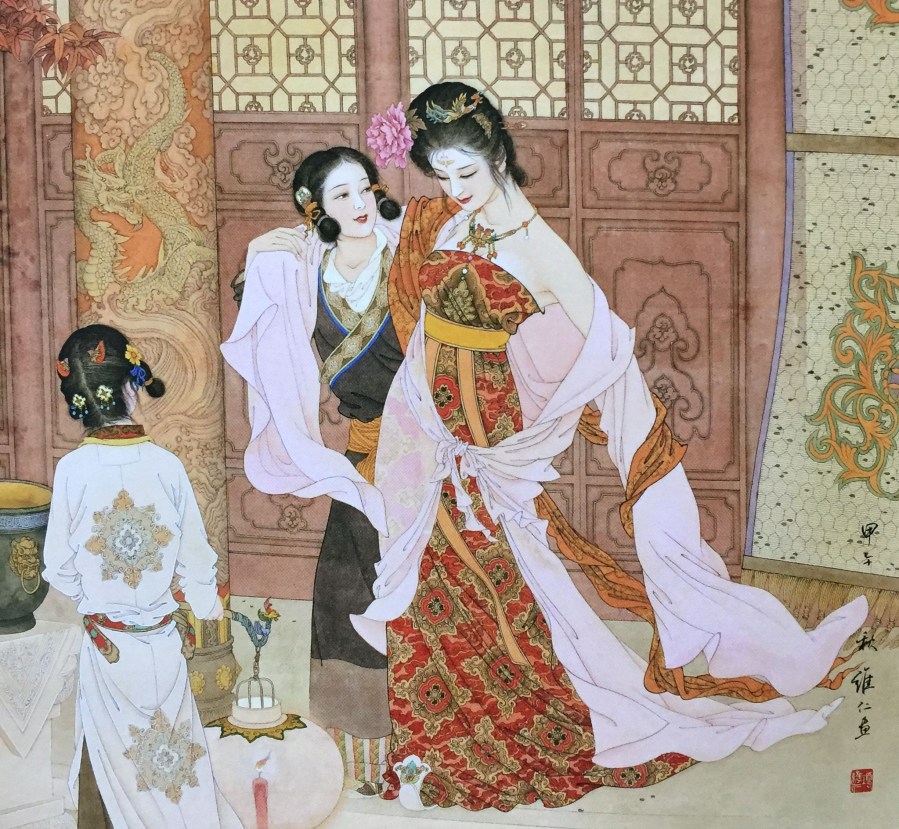
What follows is the second part of my interpretation of 长恨歌 (the song of everlasting regret) by 白居易. See part 1 here: https://venividiveritas.com/2023/05/09/the-song-of-everlasting-regret-part-1/
九重城阙烟尘生,千乘万骑西南行。
Above the forbidden city loomed the smoke of war. Southwest the host travelled, a thousand horses, ten thousand men.
翠华摇摇行复止,西出都门百余里。
The emperor’s jade crown swayed and turned, the fire of rebellion burned.
六军不发无奈何,宛转蛾眉马前死。
All six armies relinquished their arms, blood was their demand. And thus her fate was sealed, in the dust of hooves and the clamour of men.
花钿委地无人收,翠翘金雀玉搔头。
Golden sparrow, gilded crown, crimson hairpins, gemstone beads, scattered about the floor.
君王掩面救不得,回看血泪相和流。
In howling agony did the emperor watch, his visage red with blood and tears. For all the powers of heaven, there was naught that he could do.
黄埃散漫风萧索,云栈萦纡登剑阁。
The sky was sallow, the winds a melancholic howl. Upon the mountain the armies travelled, to the fortress high above the clouds.
峨嵋山下少人行,旌旗无光日色薄。
The sun was pale, the banner lustreless. All was silent in the mountain’s shadow.
蜀江水碧蜀山青,圣主朝朝暮暮情。
The lake was clear, the mountain was green, but such sight the emperor could not enjoy. Sunrise, sunset, he thought only of her smile.
行宫见月伤心色,夜雨闻铃肠断声。
The nights were long, the moon spelled sorrow. The bells of mourning rent the grieving heart.
天旋地转回龙驭,到此踌躇不能去。
Fortune turned the tides of war, and upon the same path did the emperor tread. At the site of parting, his movement stalled.
马嵬坡下泥土中,不见玉颜空死处。
Beneath the graceless hill, in mud and filth, there was not a glimmer of beauty to be seen.
君臣相顾尽沾衣,东望都门信马归。
Liege and servants wept as one, garments tainted by tears. Eastward, the palace loomed, but none blew the triumphant horn.
归来池苑皆依旧,太液芙蓉未央柳。
The ponds and palace were still the same, in the lake of lotus the willow stood.
芙蓉如面柳如眉,对此如何不泪垂?
Her smile was a blooming lotus, her brows were swaying willow. How could such sight stem his tears?
春风桃李花开日,秋雨梧桐叶落时。
The plums bore fruits with the breeze of spring. Fallen leaves swirled with the autumn wind.
西宫南内多秋草,落叶满阶红不扫。
Weeds and sallow leaves, never were they swept.
梨园弟子白发新,椒房阿监青娥老。
Upon the heads of courtiers white hair grew, maids and servants wrinkled and aged.
夕殿萤飞思悄然,孤灯挑尽未成眠。
The light of fireflies, a fading sun, a mind that could not rest. The candles burned out and the lanterns dimmed, but still he could find no peace.
迟迟钟鼓初长夜,耿耿星河欲曙天。
Midnight sounded echoing drums, upon the starry rivers the emperor gazed, waiting for the sun.
鸳鸯瓦冷霜华重,翡翠衾寒谁与共?
Alone was the mandarin duck*, where in the frosty night had his mate gone? Behind lotus curtains, with whom could he share the imperial quilt?
悠悠生死别经年,魂魄不曾来入梦。
Years came, years went, thousands lived and died, but never did he forget. Still everynight he waits in dreams, to glimpse her faded visage.
*the mandarin duck, or 鸳鸯, famously mate for life and are often used in Chinese literature as symbols of inseparable bonds.
 Veni Vidi Veritatem