
In the first part of the series, we delved into the processes behind the development of the Apple smartphone — from Jobs’ motivation and inspiration, to the obstacles that stood in front of the development process (check it out here). In the second part, we’ll take a look at one of the most influential processes of technology that history has brought us: the Gutenberg printing press. Though many materials today rely on digital technology for its distribution, this development has undoubtedly been a stepping stone for many of our written manuscripts.
In this article, we’ll firstly examine how a Gutenberg printing press works, and analyse its strong resemblance to modern printing. We will then investigate the thought processes, and the development process i.e. how did Gutenberg come to invent the printing press and what benefits did it bring —local, global, and intergenerational?
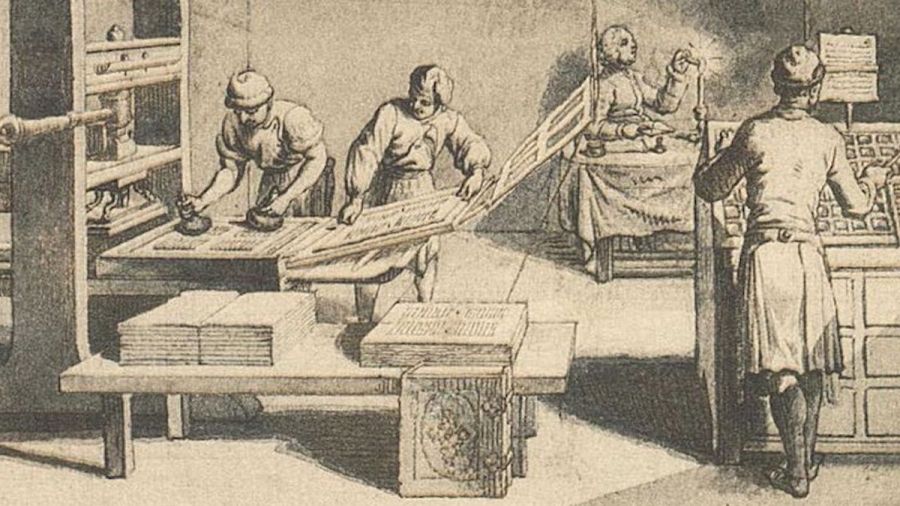
So first — how exactly did a Gutenberg printing press work? Instead of writing everything letter by letter, Johannes Gutenberg (1393-1406 (birth date unknown)— 1468)designed sheets of movable type (generally made of copper), sheets which had pieces that were able to be rearranged into different texts for any combination of letters and numbers. Think of it like a jigsaw puzzle, but with no restriction on where to place the pieces. This movable type was placed on a board, termed the “lower platen”. After coating the top of the movable type with ink, a sheet of paper was placed on top, and it was covered by another board, termed the “upper platen”. Pressure was then applied in order to compress the lower and upper platen, meaning the ink would press onto the movable type, hence efficiently recreating any combination of text that was desired.
While this is ostensibly impressive, we also aim to provide the truth, so I would like to acknowledge here that this technology may have been first introduced many centuries ago, with evidence of its development dating back to the 10th century. According to the literary hub, the movable type, the essential component of the Gutenberg printing process was invented by a civil minister “Choe Yun-ui”, who reconstructed a coin minting method to form the first movable type ever documented. Nonetheless, the popularisation of books and other printing emanated from Gutenberg’s discovery, possibly because he lived in an environment which braced itself for huge opportunity and reform, or perhaps because of another anonymous reason. Nowadays, printing occurs in many ways, shapes of forms, with ink printing (with or without colour) being the type that strikes the most resemblance to the Renaissance method; these are now done with the thermal inkjet printers. We have photocopying, laser printers, digital printing, 3D printing, and the list goes on.
Finally, how did this invention come to light, and how has it benefited society? And what can we generalise from this process? Gutenberg was born into a very hands-on family, trained to cut gems, as a goldsmith, and working with mirrors. It was likely a couple of years into industry when he started experimenting with the printing press; unfortunately not much is known here, but we can conclude that he had an unwavering degree of curiosity to explore further than what was initially known in his field. Initially, straight after this invention, there were many societal benefits. Books, which initially had to be prescribed letter by letter, word for word, were sought out as very rare, prized items in which (generally) only upperclassmen were able to afford. Now, they could be mass printed, with the ability to print over 200 sheets an hour; nowadays, that number has increased by more than 100 times. As a bonus, Gutenberg’s project, The Gutenberg Bibles, was made readily available, serving as a catalyst to the rapid spread of religion. In the longer term, it stimulated trade, and made communication much simpler for society. With the growing amounts of trade over the subsequent decades and centuries, the upturns in the economy would then have been a further catalyst to further reform, from newsletters, to scientific discoveries — to make the world stay more informed. As another plus, Project Gutenberg is now a platform where the public is able to download free eBooks (ironically not paperback).
What do YOU think about this? If you would like to see any inventions covered, feel free to suggest them in the comments below.
Image credit: Britannica
 Veni Vidi Veritatem