
Oftentimes, it is quite amazing when we take a step back and look around at the abundance of marvellous innovations which surround us. From the invention of the light whose incandescence allow reading at night, to the scaffolding which holds the building upright, to the complex chemical and electrical conundrums that had to be solved so modern automobiles could move: these wondrous discoveries have each played a vital role in shaping the world as it stands today.
In this new series, we will be examining the thought processes behind some of these unique discoveries. What drove them to be made the way they were? Why were they made? What were the processes of invention? Who were the men and women behind these innovations? Where did these ideas come from? When did they gather the processes to invent these items and/or processes? How did they manage to implement these ideas in such a short span of time?
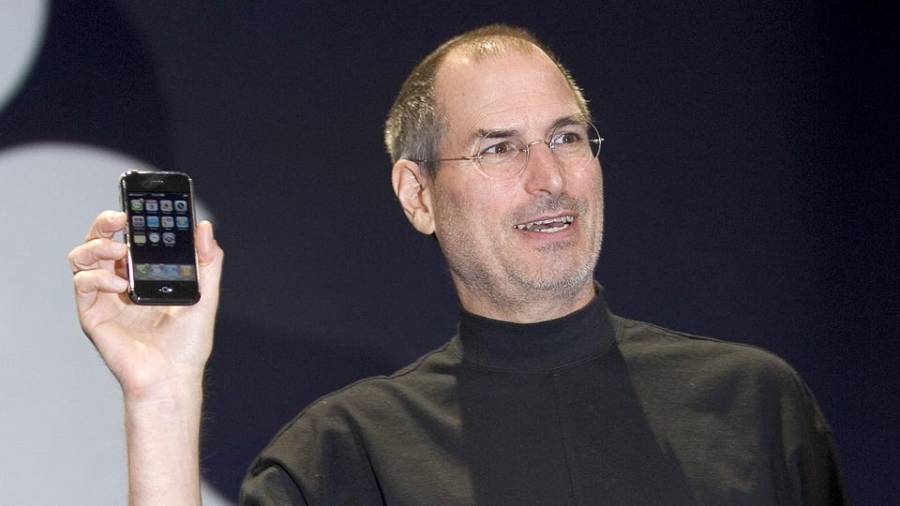
For this first part of the series, I’ll examine some of the thought processes for the development of one of the most intricate pieces of technology that we take for granted: the phone. More specifically, we’ll look at smartphones, and how Steve Jobs and his team launched the first smartphone (there is some contention around this) in early 2007. We will first examine his purpose and motivation behind designing a smartphone, and then discuss the development and implementation process.
Jobs observed that many Americans, after the release of the iPod in late 2001, still carried around other phones (“Blackberrys”), iPods and other separate devices. Thinking ahead, he determined that it would be more feasible to carry around a singular personal digital assistant (PDA) — one which cell phones (used for calls and messages) could merge with music players, and other internet features. With this seemingly simple idea of improving convenience, Jobs’ and his team commenced the development of the infrastructure needed for a successful product. (The design of the device is mostly attributed to Apple’s Chief Design Officer, Sir Jonathan Ive).
However, as expected from many great creations, there are inevitable roadblocks, barricades and sources of failure that remain hidden, and suddenly spring into the light as one gets close to their goal. The development team encountered several problems, from the lack of a sophisticated Operating system. Additionally, a rise in the popularity of competitors’ products in the subsequent years, such as Palm Treo and its variations, used an alternative Palm Tree OS, and had a camera, screen and even bluetooth on some models. In the end, Jobs partnered with Motorola, creating a model finally compatible with iTunes — the Motorola ROKR E1.
Although one may think that this partnership would have made things a lot easier, the problems only continued rolling in. For one, the product had a cap of 100 songs (imagine if spotify only allowed us to listen to 100 songs now !), which was a number smaller than the song cap imposed on the smallest iPod at that time. Although there were a couple of phones which were developed soon afterwards with this collaboration, Jobs ultimately made the decision to pull the plug on the deal in late 2006.
Instead of giving up at this point, even after a disappointing failed public demonstration of the iPhone, Apple continued the development with AT&T (previously known as Cingular), eventually releasing it in early 2006. Although not much is known between this collaboration, the outcome can speak for itself. The first generation sold over 6 million units (before its discontinuation a year later).
It is undoubtedly the fact that the development of technology requires commitment, technical expertise, and a huge amount of resilience. However, when we consider this development of one of our most crucial pieces of technology in its most basic form, it all stemmed from one seemingly trivial observation just to improve our quality of life: just the idea of … making life easier.
 Veni Vidi Veritatem
Pingback: Innovation: The second of a many part series – Veni Vidi Veritatem